• Skip to primary navigation
  • Skip to main content
  • Skip to footer
Buzard Pipe Organ Builders

Buzard Pipe Organ Builders

Committed to building the best pipe organs in the world.

  • About Us
    • The Buzard Sound
    • Our Philosophy
    • Our History
    • Our People
  • Our Instruments
    • Explore Our Instruments
    • The Buzard Collection
    • Service & Restoration Projects
    • Current Projects
  • Service & Restoration
    • Service & Restoration
    • Tuning & Maintenance
    • Restoration
    • Rebuilding & Tonal Enhancements
    • Consoles
    • Relocation
    • Consultation Services
    • For Sale
  • Contact
Our Instruments > Buzard Collection > Current Builds > Buzard Opus 49

Buzard Opus 49

Jefferson City, Missouri

From the Builder

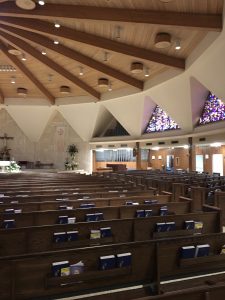
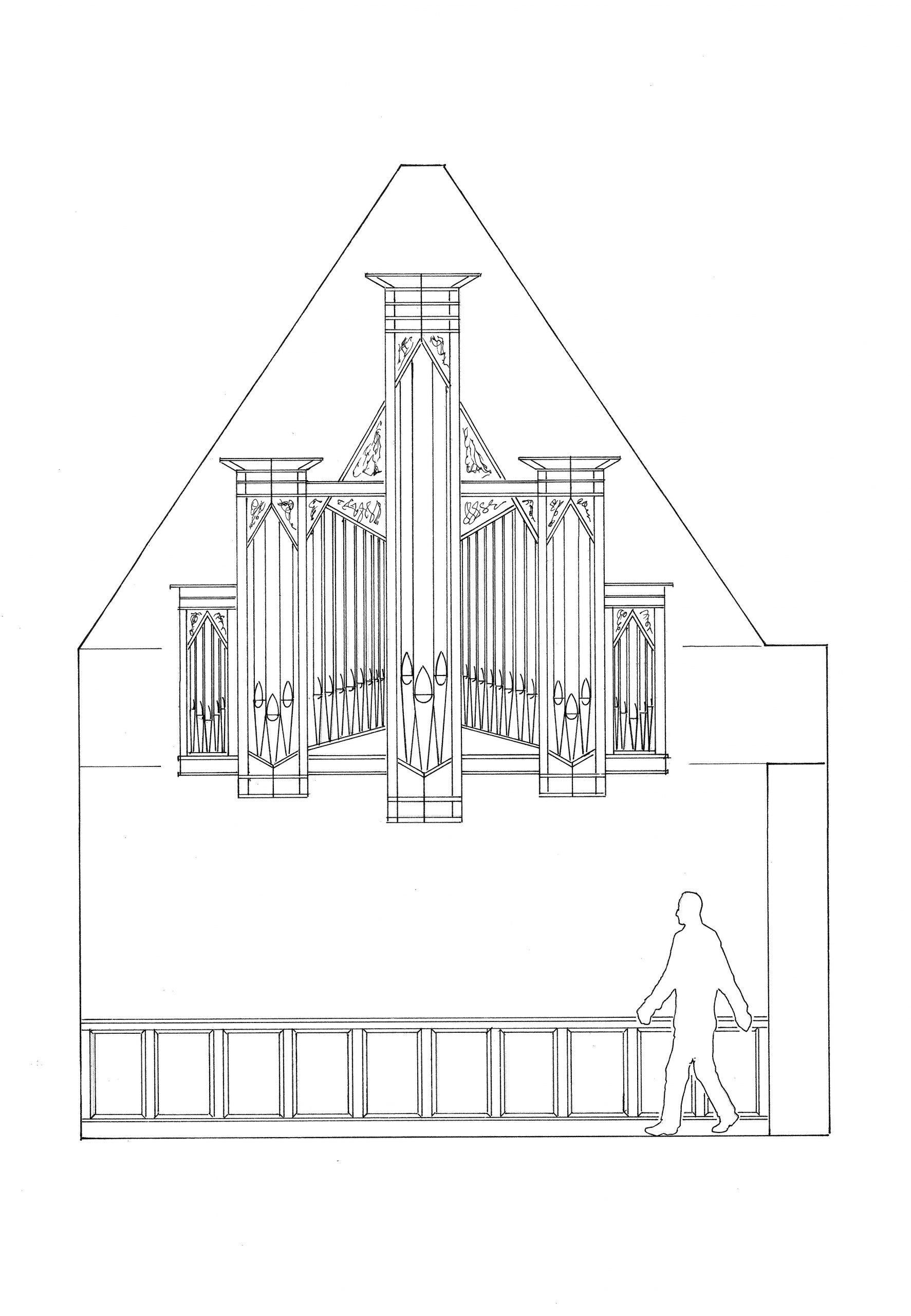
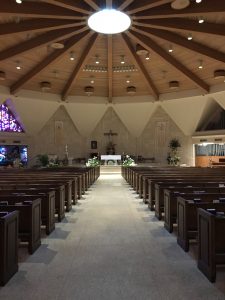
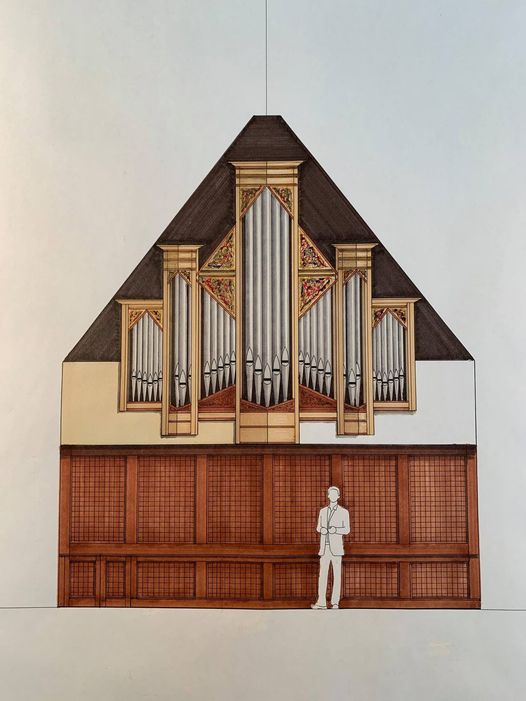
The recently renovated Cathedral of St Joseph includes a combination of circles, triangles, and straight lines without parallels. For those of us who delight in symbolism, these are powerful statements of Eternity, Trinity, and Truth. The pipes of the new Buzard organ are located in one of those triangular spaces, embellished by the casework and façade. The strong geometric lines are warmed with other appropriate visual elements: Grapes (“I am the Vine, you are the branches”), Dogwood blossoms (legendary reminders of the Crucifixion), and a Lily (the flowering St Joseph’s staff.)

As organ builders, it was our desire to create an instrument that addresses the acoustical challenges inherent in that geometry, while also enriching the spiritual life of a worshipping congregation. Many people associate a pipe organ only with the powerful impact of hearing it at full tilt.   All the tonal resources of this organ can be gathered together and blended into a rich tapestry of sound that lives up to that expectation! But we have also lavished our attention on the each component of that tapestry so that any combination of stops, from the most gentle to the most commanding, rewards the listener with equal richness. 

Although modest in size, the new Cathedral organ stands in keeping with our other instruments featuring a wealth of tone colors, classical scaling, and voicing with a slight romantic cast.  A portion of the Great is under expression, as in several of our other recent organs.

Two ranks have been placed in the lower level of the case to provide more direct tonal support to the Cathedral Choir, allowing the remainder of the organ above to “color” the accompaniments, lead congregational singing, and render solo organ literature.  

Buzard Pipe Organ Builders is a team of highly skilled artisans who have worked together to design and construct this magnificent organ for the Cathedral of St. Joseph in Jefferson City. Drawing inspiration from classical organ-building traditions while integrating modern technological advancements, this instrument resonates with rich, harmonious tonal color that enhances congregational worship and reaches out with beauty to the community at large. From the largest pipe to the most intricate wooden joinery and smallest moving part, every component was lovingly crafted with meticulous care, ensuring both aesthetic appeal and timeless acoustic excellence. It brings us great joy to entrust to the Cathedral congregation the work of our hands, minds, and hearts. May that joy continue to brighten the lives of all who hear its music now and in the future. 

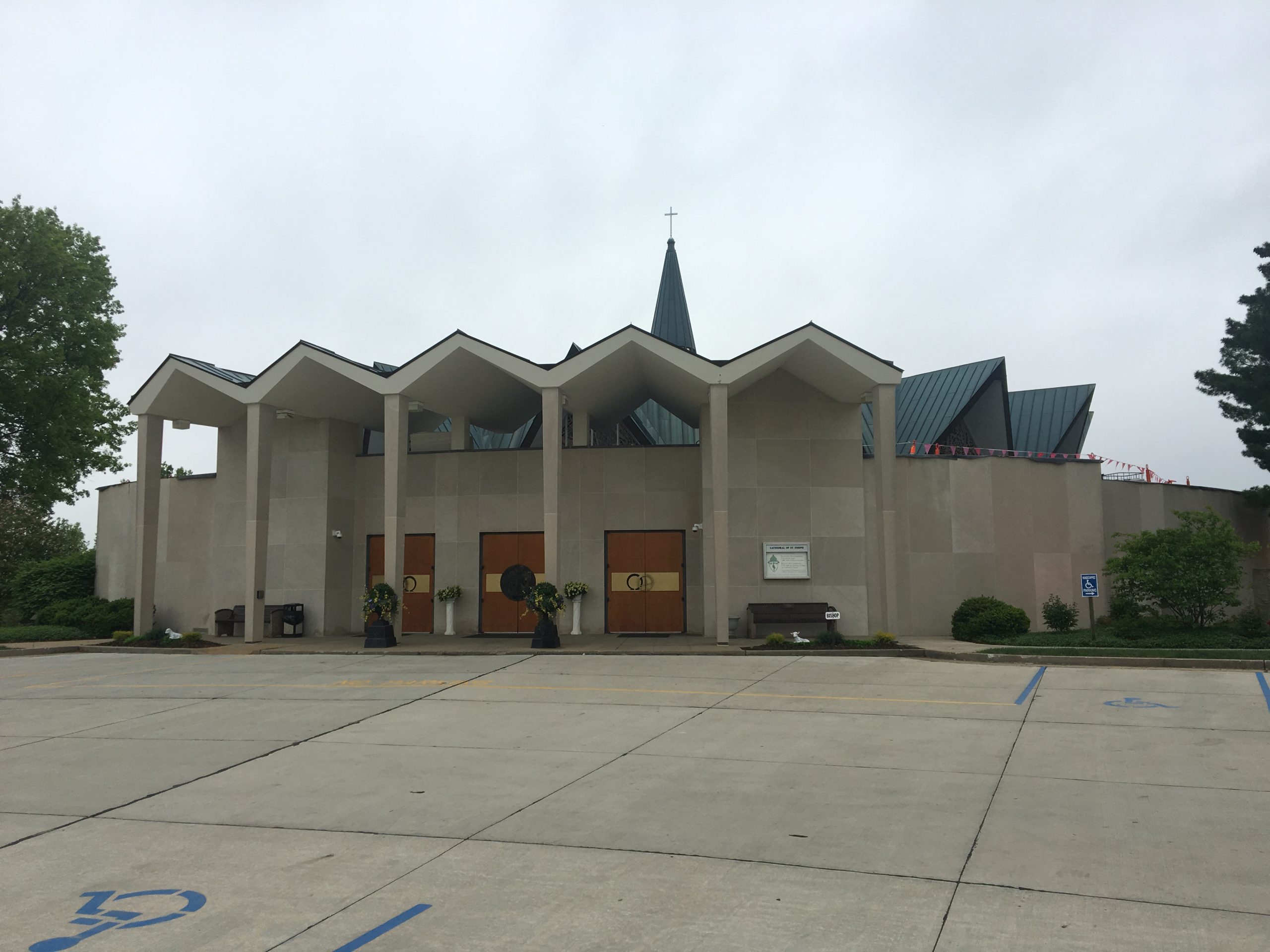
Initial discussions concerning the project began in 2019.  The Cathedral, built in the late 1960’s, was planning a complete transformation of the building’s liturgical functionality. Both its exterior and interior were completely renovated. The new organ is the final component of this comprehensive renovation.

We are grateful to The Most Rev. W. Shawn McKnight, Bishop and the Rev. Jeremy Secrist, Bishop’s Delegate for the Care and Preservation of Pipe Organs (who served as consultant for the project) for the opportunity to craft this instrument.

Organist Ken Cowan performed the first public concert on Buzard Opus 49 on June 20, 2025.  

Fred Bahr

President and Tonal Director


From the Consultant

Akin to the design and construction of pipe organs during the preceding century, the construction of ecclesiastical edifices was not immune to a wide variety of approaches and philosophies either.  Some have been inspiringly refreshing, whereas others have challenged the categories of practical form and function.  In 1956, the Diocese of Jefferson City was established in the center of Missouri, and the unquestionably gothic structure of St. Peter Church immediately adjacent to the state Capitol was named the diocese’s cathedral church.  Although it admirably held that title for 13 years, there had been plans in the minds of some for a new cathedral to be built.  

Following the fourth and final session of the Second Vatican Council, the Cardinal Archbishop of St. Louis, had some time to travel around parts of Europe before returning to Missouri.  At some location in Austria, Cardinal Joseph Ritter’s eyes beheld a circular church in Modernist architectural form that could seat many more faithful, but without those pesky structural elements called “columns” – and thus was the genesis of the current Cathedral of St. Joseph, completed in 1968.  

Although ample terrazzo and marble was used throughout the structure, so too were intentional efforts to restrain any sort of acoustical resonance in a building that seats 950.  A 31 rank instrument from the Wicks Organ Company (Opus 4801) was completed in 1968, occupying an organ chamber to the right of the sanctuary.  Although control action was updated in 2001, the instrument perpetually struggled to speak into the room, as the entirety of the instrument was located on the cathedral floor – and the placement of a choir immediately in front of the instrument only further limited its capacities.

In 2019 I was charged by our new bishop to draw together a proposal for a new instrument for the Cathedral, coinciding with the overall renovation of the entire building.  Having personally experienced what it was like to sing in a choir situated immediately in front of the previous instrument, an alternative location for the organ was first and foremost in my mind.  The original plans for the Cathedral had envisioned organ chambers behind the altar and sanctuary, although these had never been constructed.  

Having invited a number of organ builders in North America for their best assessment and ideas, the creative design energies of the Buzard Pipe Organ Company proposed the best solution to this rather challenging architectural arrangement.  Making use of the mostly triangular organ chamber original to the building’s construction, the Buzard Pipe Organ Company has created an instrument of 36 ranks (and four digital voices) wherein the majority of the instrument is now elevated and slightly cantilevered above the steel retention ring of the crown-shaped building.  This elevated position allows for the capacity of this modest instrument to speak commandingly into the body of the church; whereas three divisions under expression provide for tremendous flexibility of control, all the while providing a façade befitting a cathedral replete with subtle references to St. Joseph, the State of Missouri and the abundance of blessings that this instrument will be for future generations.

Fr. Jeremy A. Secrist

Bishop’s Delegate for the Care and Preservation of Pipe Organs

Sub Dean, Central Missouri AGO Chapter

Pastor, St. Joseph Church, Salisbury, St. Mary of the Angels, Wien, St. Boniface, Brunswick


From The Catholic Missourian:
https://catholicmissourianonline.com/stories/organ-recital-marks-completion-of-cathedral-renovations,6135

Stoplists

Great

Manual II, in and behind façade

Double Dulciana16′ (Ch.)
Open Diapason8′ (façade)
Flûte á Bibèron8′
Flûte Cœlestis II8′
Dulciana8′ (ext 16′)
Principal4′
Spire Flute4′
Twelfth2 2/3′
Fifteenth2′
Fourniture IV1 1/3′
English Horn16′
Trumpet8′
Clarinet
– Tremulant
– Tremulant Cymbalstern
8′
Tromba8′ (Ped 16′)
Tromba Clarion 4′ (ext)

Swell

Manual III, Enclosed & expressive in the upper portion of the organ case

Lieblich Gedeckt16′ (Ch.)
Stopped Diapason8′
Salicional8′
Voix Celeste (low G)8′
Principal4′
Harmonic Flute4′
Nazard2 2/3′
Octavin2′
Tierce1 3/5′
Grave Mixture II2 2/3′
Plein Jeu III1′
Bassoon16′
Trompette8′
Oboe8′
Clarion
– Tremulant
4′ (from 16′)
Tromba8′ (Ped 16′)
Tromba Clarion4′ (ext.)

Pedal

Façade, various locations, partially Expressive

Subbass32′ (Walker)
Lieblich Gedeckt32′ (Walker)
Open Diapason16′ (Walker)
Bourdon16′
Lieblich Gedeckt16′ (Ch.)
Dulciana16′ (Ch.)
Principal8′ (façade)
Bourdon8′ (ext. 16′)
Spire Flute8′
Choral Bass4′ (ext. 8′)
Open Flute4′ (ext. 16′)
Contra Bassoon32′ (digital)
Trombone16′
Bassoon16′ (Sw.)
Tromba8′ (ext. 16′)
Oboe8′ (Sw.)
Trumpet8′ (Ped. 16′)
Tromba Clarion4′ (ext. 16′)
Clarion4′ (Sw. 16′)

Choral

Manual I, Expressive, in lower portion of the case

Double Dulciana16′
Lieblich Gedeckt16′
Dulciana8′ (ext.)
Wood Gedeckt8′ (ext.)
Dulcet4′ (ext. 8′)
Flute d’ Amour
– Tremulant
4′ (ext. 8′)
Tromba8′ (Ped. 16′)
Tromba Clarion4′ (ext.)
Download Stoplist

Filed Under: Buzard Collection, Current Builds, Projects

Footer

112 West Hill Street
Champaign, Illinois 61820
Tel: 217-352-1955

About Buzard
Contact

Site by Neon Moth | Privacy Policy | Copyright © 2025 Buzard Organs